
Cream of Tarter
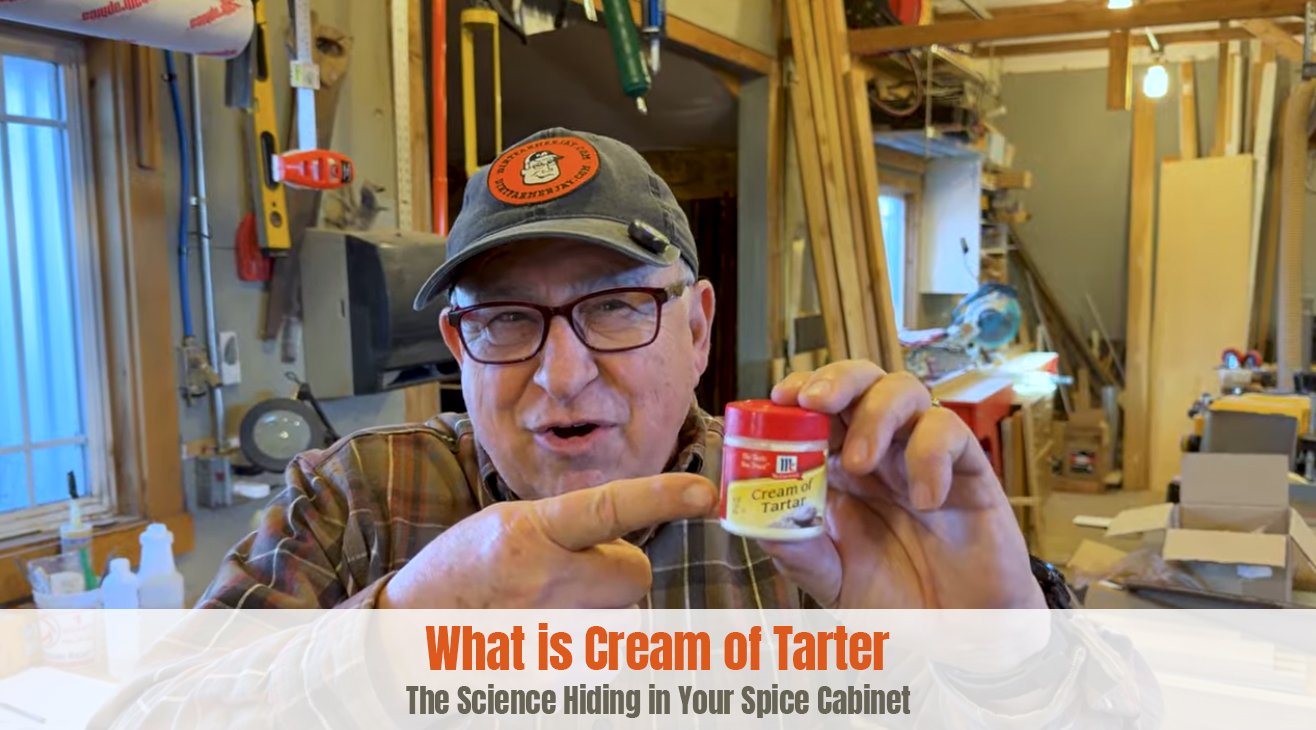
Cream of Tartar isn’t cream, isn’t tartar on teeth, and didn’t come from a cow. It’s a science story hiding in your spice cabinet—and once you know what it does, you’ll never look at baking the same way again. Cream of Tartar is one of those ingredients you’ve probably owned forever… without ever really knowing what it is. In this Hidden in Plain Sight episode, we dust off this mysterious white powder and explain where it comes from, how it works, and why it shows up in so many recipes. Cream of Tartar is potassium bitartrate, a natural by-product of winemaking. As grape juice ferments into wine, crystals form inside the barrels. Those crystals are harvested, purified, and ground into the familiar powder found in your kitchen. Its name comes from tartaric acid, the natural acid found in grapes and wine, not from the tartar that forms on teeth. The two share a name, but that’s where the relationship ends. In cooking and baking, Cream of Tartar acts as a stabilizer and acid. It helps whipped egg whites hold their shape, keeps sugar from crystallizing, improves texture in baked goods, and even helps retain color when boiling vegetables. It’s also used outside the kitchen for cleaning metals and gentle household scrubbing. You’ll often find Cream of Tartar listed as an ingredient in baking powder, and for good reason. Baking powder contains both an acid (often Cream of Tartar or a similar compound) and a base (baking soda), so it activates on its own when moistened. Cream of Tartar by itself is only the acid, it needs baking soda to create lift. That’s why the two behave differently in recipes. If you enjoy learning the stories behind everyday things hiding right in front of us, be sure to watch the full DirtFarmerJay – Hidden in Plain Sight playlist. There’s a lot more ordinary magic waiting to be uncovered.










More Like this